
Coinbase Linkdrop Analysis
Nov 2024 • Web3 Analytics
I put together a Dune dashboard exploring the Coinbase smart wallet's linkdrop feature. Its activity trends, token usage, and what the data says about how users are actually engaging with it.
How Linkdrop Works
Linkdrop is a token distribution mechanism built into the Coinbase smart wallet. The flow is straightforward:
- A sender creates a shareable link and deposits tokens into the contract.
- The smart contract holds the tokens securely.
- The recipient claims them via the link, no wallet required on their end.
- Any unclaimed funds are automatically returned to the sender after expiry.
The dashboard tracks three core transaction types across the contract's lifetime: Deposits (56,810), Redeems (45,537), and Refunds (11,211).
Insight 1: Onchain Summer Drove the Spike
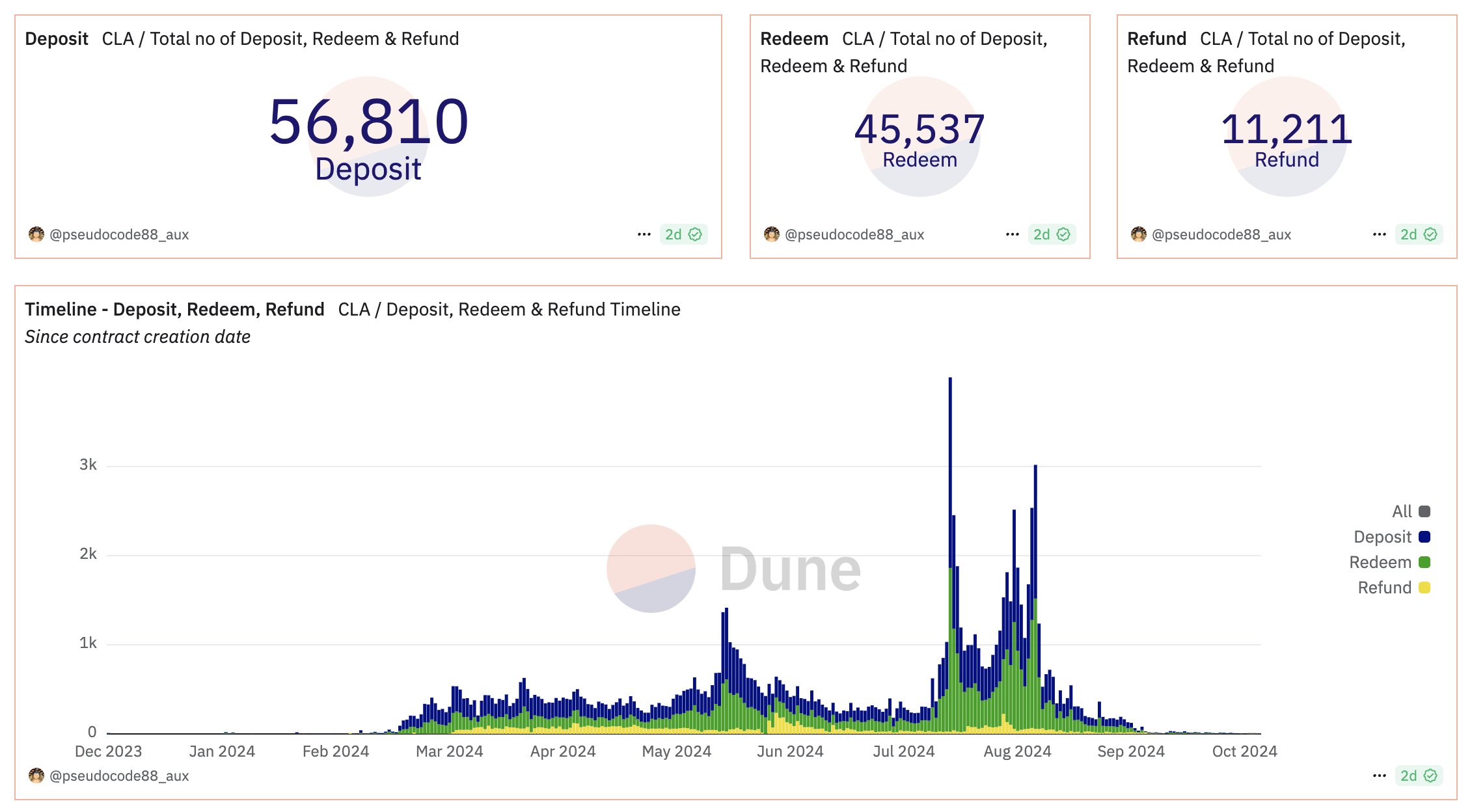
Activity surged during Coinbase's Onchain Summer campaign and has tapered off since. The timeline shows a clear peak around July–August 2024 followed by a steady decline.
That said, the beta was a useful stress test. Linkdrop's core mechanic, sending tokens without the recipient needing a wallet, has real legs, especially for micropayments where the friction of traditional systems tends to kill adoption before it starts.
Insight 2: Meme Tokens Dominate Token Usage
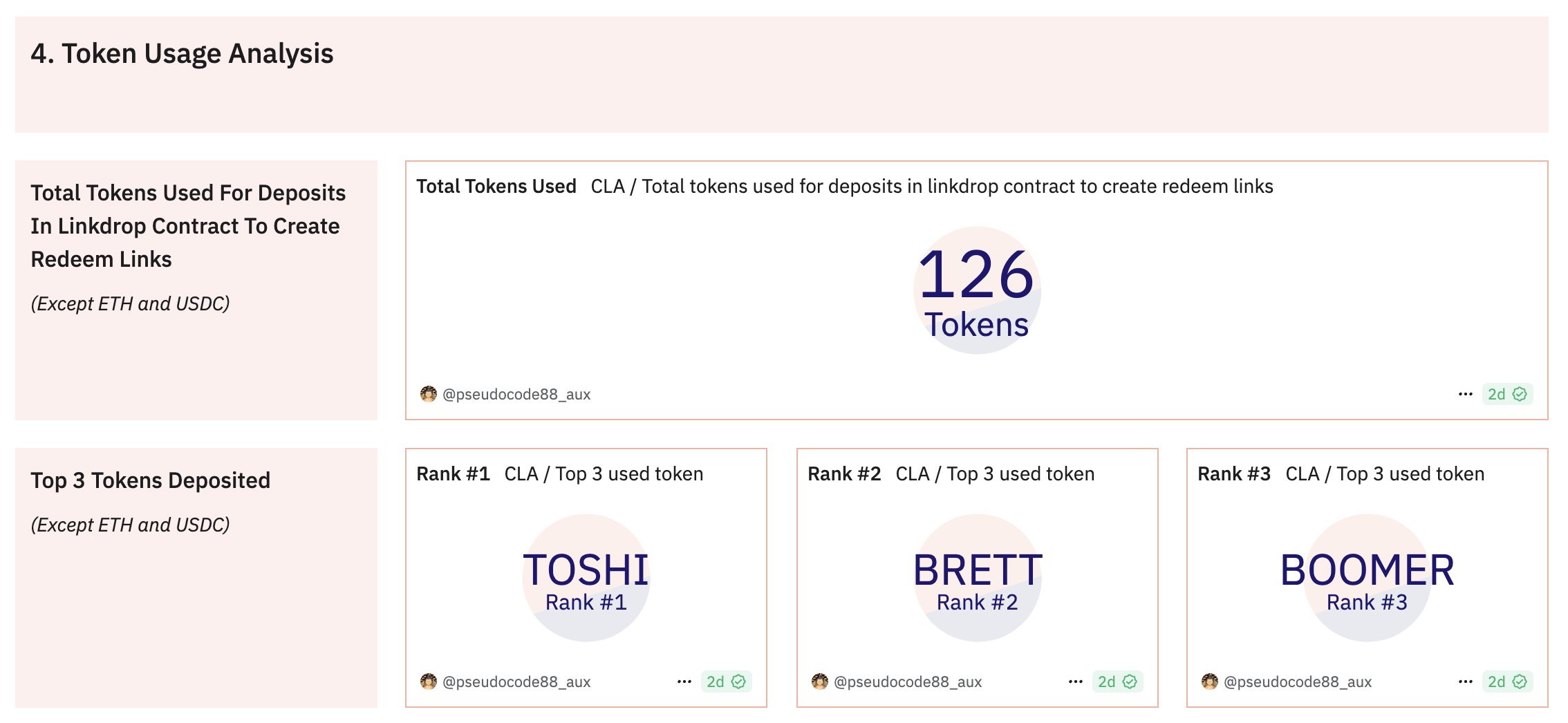
Outside of ETH and USDC, 126 different tokens were deposited into the linkdrop contract. The top three were all meme tokens: TOSHI at rank one, BRETT at rank two, and BOOMER at rank three.
The meme token dominance makes sense. These communities are already native to the Base ecosystem and have strong incentives to distribute tokens as rewards or giveaways. TOSHI and BRETT in particular have maintained consistent presence for months.
Insight 3: Over Half the Wallets Send Back to Themselves
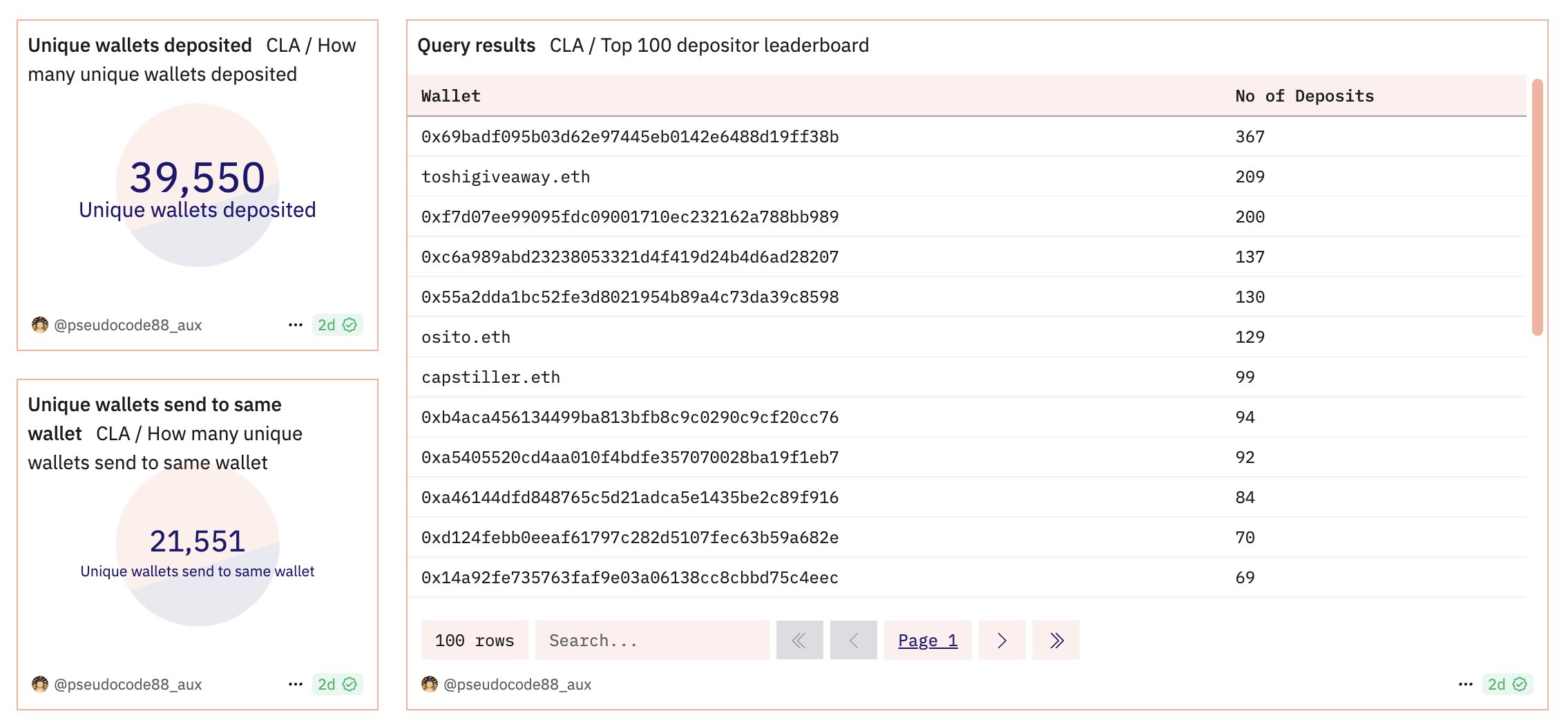
39,550 unique wallets made deposits. Of those, 21,551 (more than 50%) sent tokens back to the same wallet they originally sent from.
A few likely explanations: users testing the feature, uncertainty about recipients, or a quick self-check before using it for real. This kind of exploratory behavior is common when people encounter genuinely new tools. The high self-send rate probably reflects curiosity more than any issue with the product.
What This Could Mean for Small Businesses
Stepping back from the data: linkdrop's one-hop onboarding model could be genuinely useful for how small businesses engage customers through blockchain.
Traditional loyalty programs come with slow signups, multiple apps, and enough friction to lose people before they ever redeem a reward. With linkdrop, a business could instantly distribute rewards, membership NFTs, or promotions through a single shareable link - no form filling, no OTPs, no app install required.
That streamlined flow could reduce customer drop-off while also simplifying the operational side of managing multiple loyalty programs. The beta data suggests the mechanics work. The question is whether the use case finds its audience outside of crypto-native communities.
